
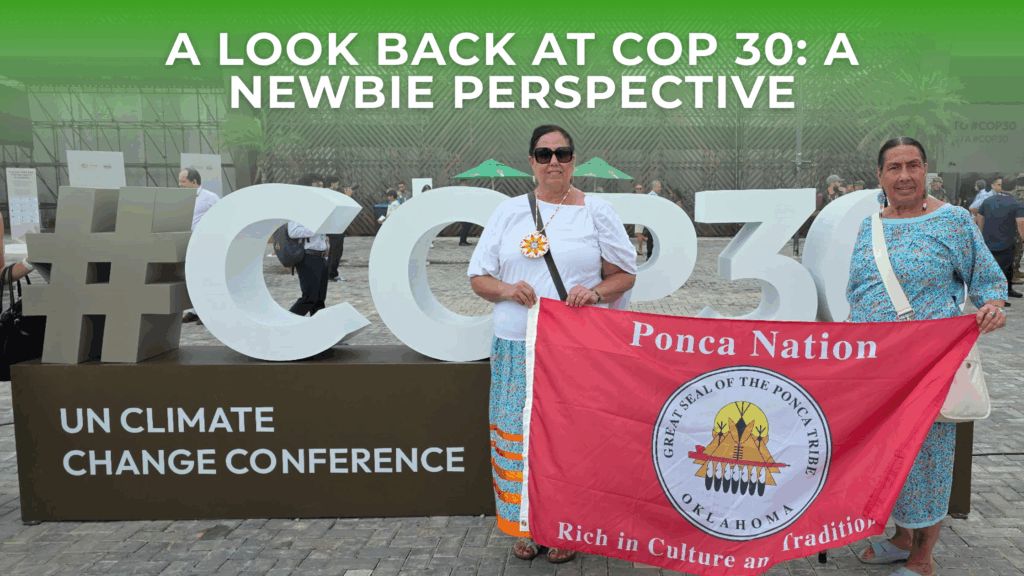
COP 30. The Indigenous COP. The People’s COP. The COP that gave us hope. COP 30, my very first COP in-person experience, and what an experience it was.
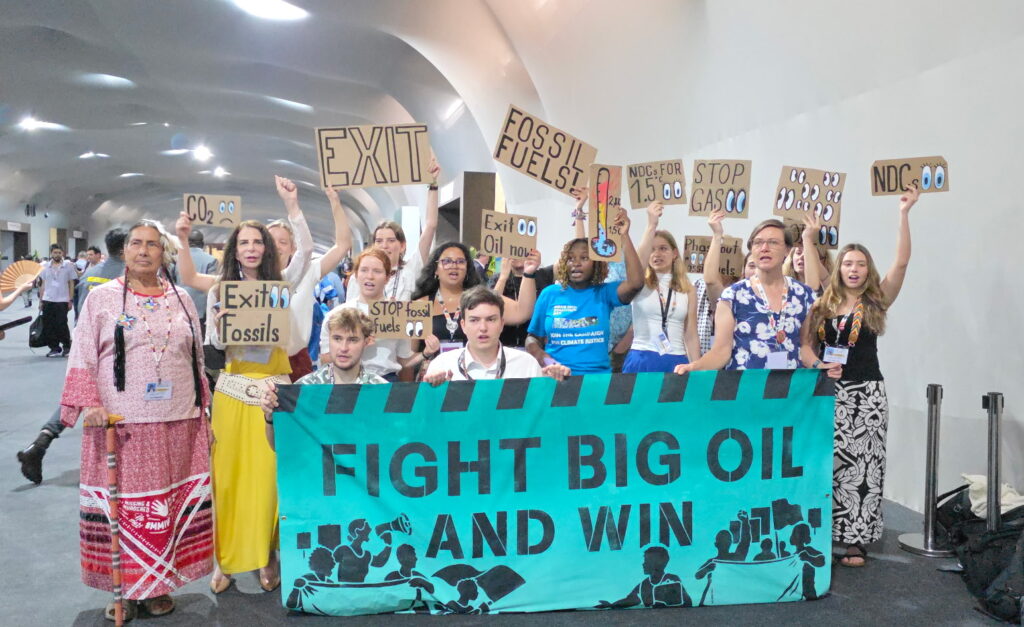
I went in with very realistic expectations. I was hopeful, and felt that we were there with purpose, but I knew that the annual UNFCCC climate Conference of the Parties (COP) is not a place where grand-scale changes come from. I knew that in spite of the Amazonian location, it was still a UN process. I knew that the oil and gas lobbyists, the countries with the big money, the world’s polluters, environmental genocidists, and money-making opportunists would outnumber Indigenous Peoples and civil society participation on the inside, the infamous “Blue Zone”.
With the presence of a record 1,600 fossil fuel lobbyists at COP30, it was no surprise that the final document failed to mention a phaseout for fossil fuels, despite pressure from 80 countries. And despite these daunting details, I also knew how important it was that we were present, that we were vocal, and that we took up space. Make them look at you, apply for all of the spaces and actions that you can, and remind them that we are watching, and we are growing in strength and numbers. They are making decisions that affect us, that impact our communities, that threaten our sovereignty, that sow the seeds of environmental genocide in our communities and poison our Peoples, water, and lands.
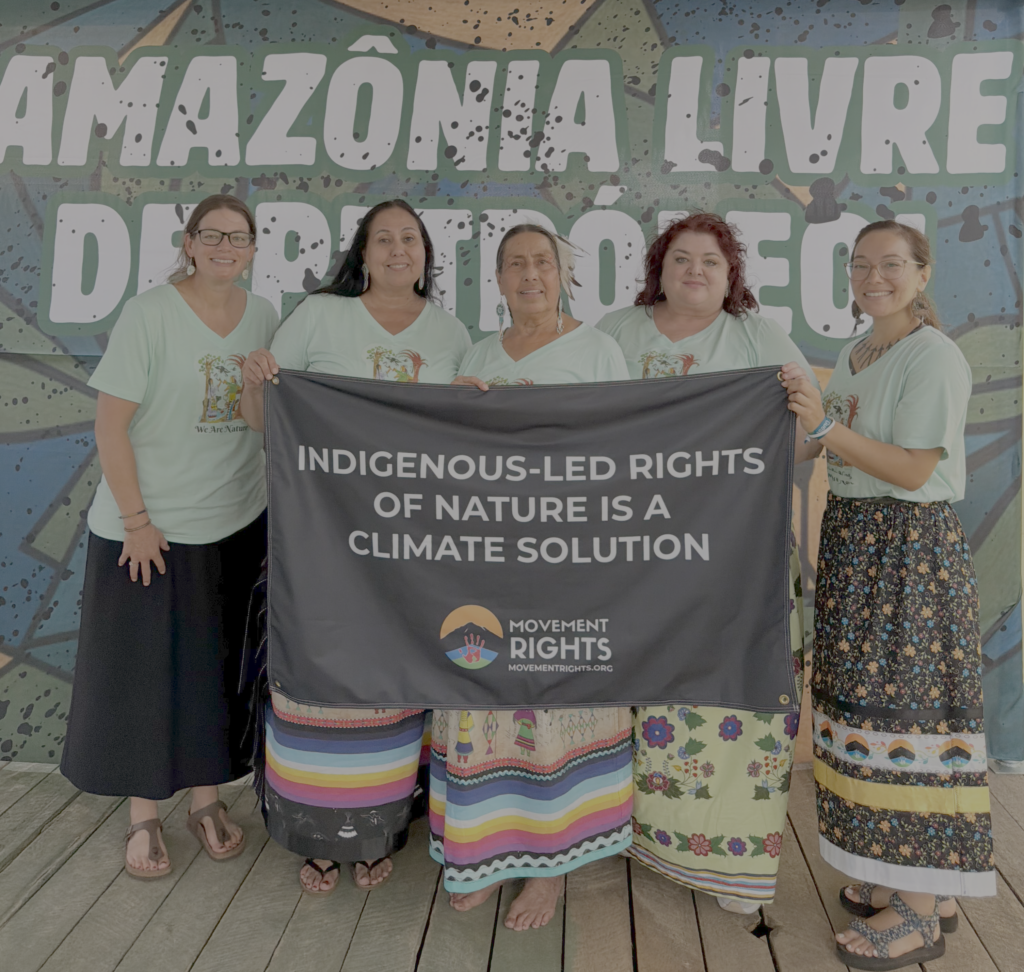
Make them look at you when they do that. Talk about Indigenous-led Rights of Nature in every space you can. Rail against false solutions and carbon scams. Call out “Nature-Based Solutions” for the crap that they are that allows polluters to continue to pollute. Support one another, cry with one another, uplift one another, and strengthen one another.
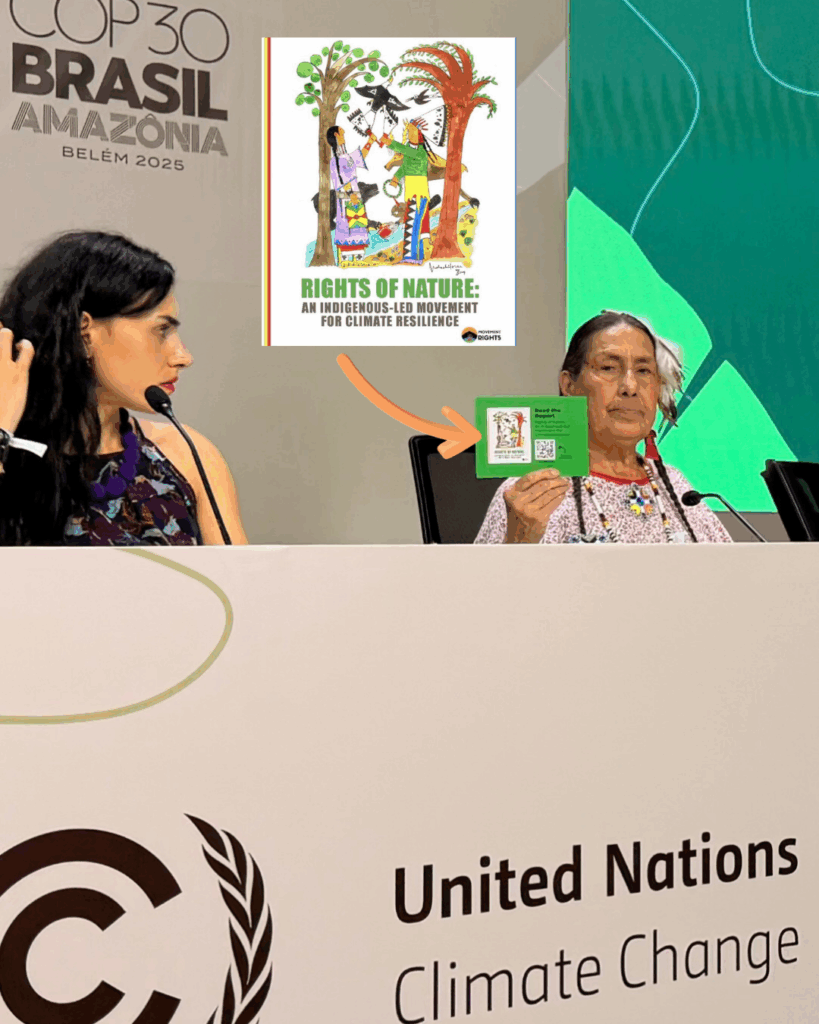
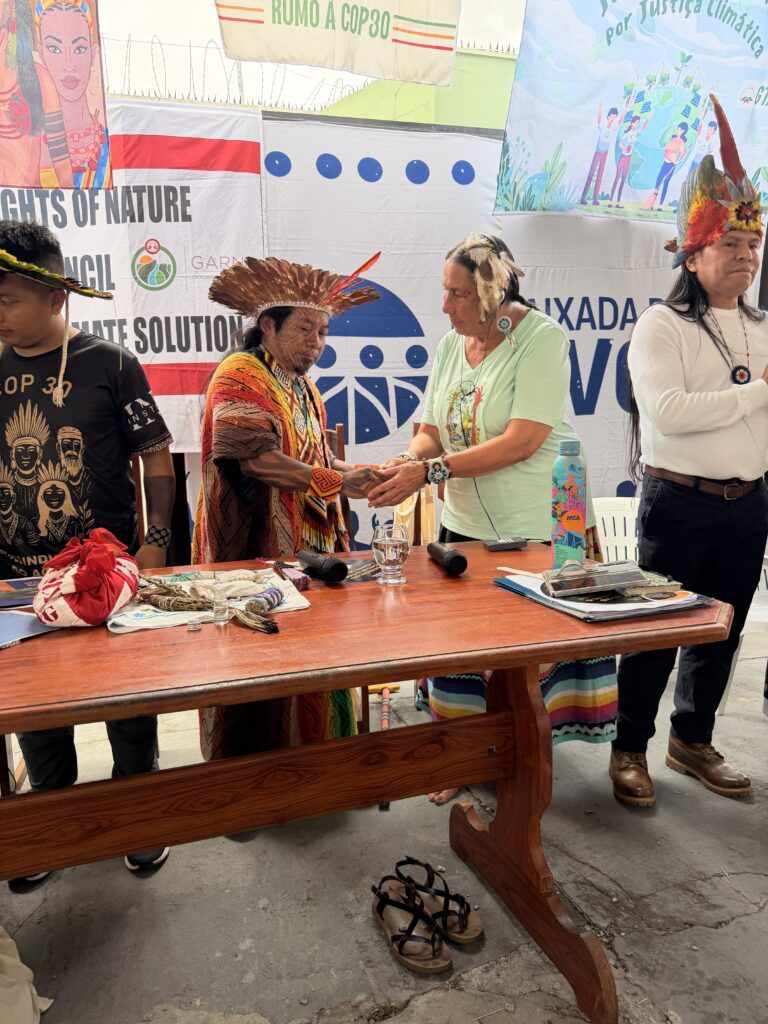
Collectively, Movement Rights’ team have attended over a dozen of the 30 Climate talks along with our allies from around the world. In Belem this year, some of us influenced the official negotiations themselves. We connected with partners and allies to move forward with projects in our global regions. We presented new ideas, launched reports such as the Movement Rights’ Rights of Nature; An Indigenous-led Movement for Climate Resilience, hosted strategic meetings, sat on panels, participated in direct actions, and were part of official press conferences and UN side events. Many of us attended to hold space in a place that has been heavily co-opted by fossil fuel lobbyists and other corporate interests hostile to climate justice, to be more than the picture on the wall.
Entering the official “zone” that was COP30 was akin to entering an alternate dimension. The walk to the entrance is a journey in and of itself. The city of Belem sits on the Equator and on the edge of the Amazon rainforest, meaning that for 24 hours a day, it is oppressively hot and humid—really, really hot and humid. The walk from the drop-off zone to the official entrance was long and lined with police and soldiers. Soldiers with full combat gear, shields, guns, mobile barricades with rolled razor wire, and stone-cold faces. Despite the UN’s image as a peacekeeping institution, they are not there to keep the peace; they are there to keep Indigenous Peoples out, to keep Civil Society out, to intimidate, and to send a very clear message that this is not a space friendly to the masses, to the People, of the People’s COP.
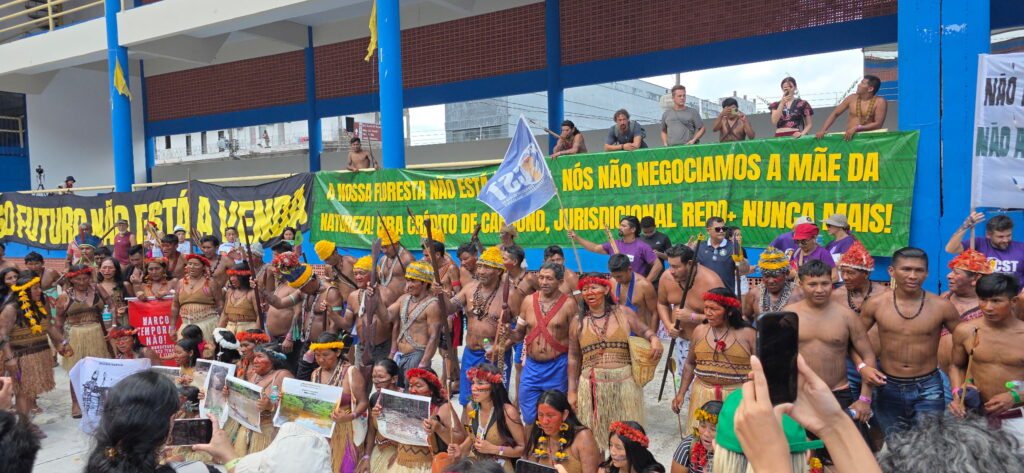
There were altercations with Indigenous Peoples of Brazil that simply wanted a voice at the COP that is in their country, on their original lands, a space they were largely denied access to. Led by the Munduruku of the Brazilian Amazon, some 100 Indigenous people peacefully stormed the COP 30 gate one evening, making international news. Family reached out to us, “We see the disturbances on the internet, are you okay?” and yes, we were okay. We weren’t there at that time, but we wished we had been—we were proud and ready to stand beside our relatives.
The COP space itself was like a giant one-story mall, but made out of nylon tent material. A mall without enough air conditioning or fans, it had water issues, and was flooded by rain. The bathrooms were unfinished, the spaces were unaccommodating to those with disabilities, unaccommodating to civil society, and crowded. It was also plagued with electrical issues, which led to an alarmingly large fire and a full evacuation of the COP 30 space near the end of negotiations. We were literally a part of pseudo climate chaos —on the inside. The irony was hard to miss.
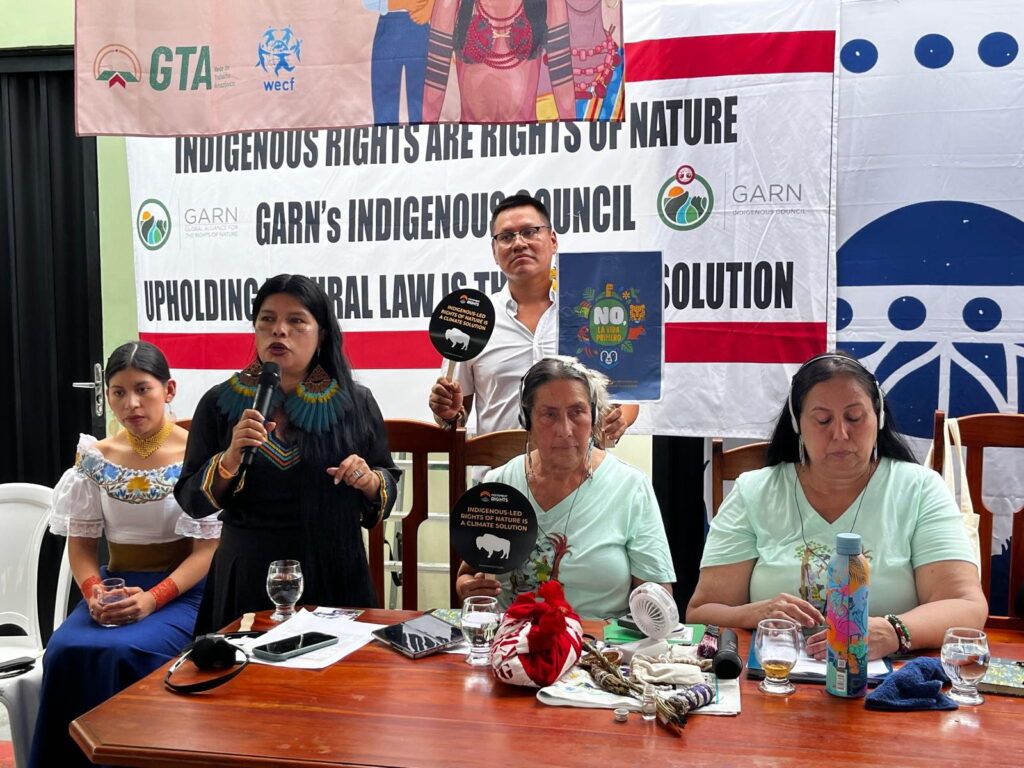
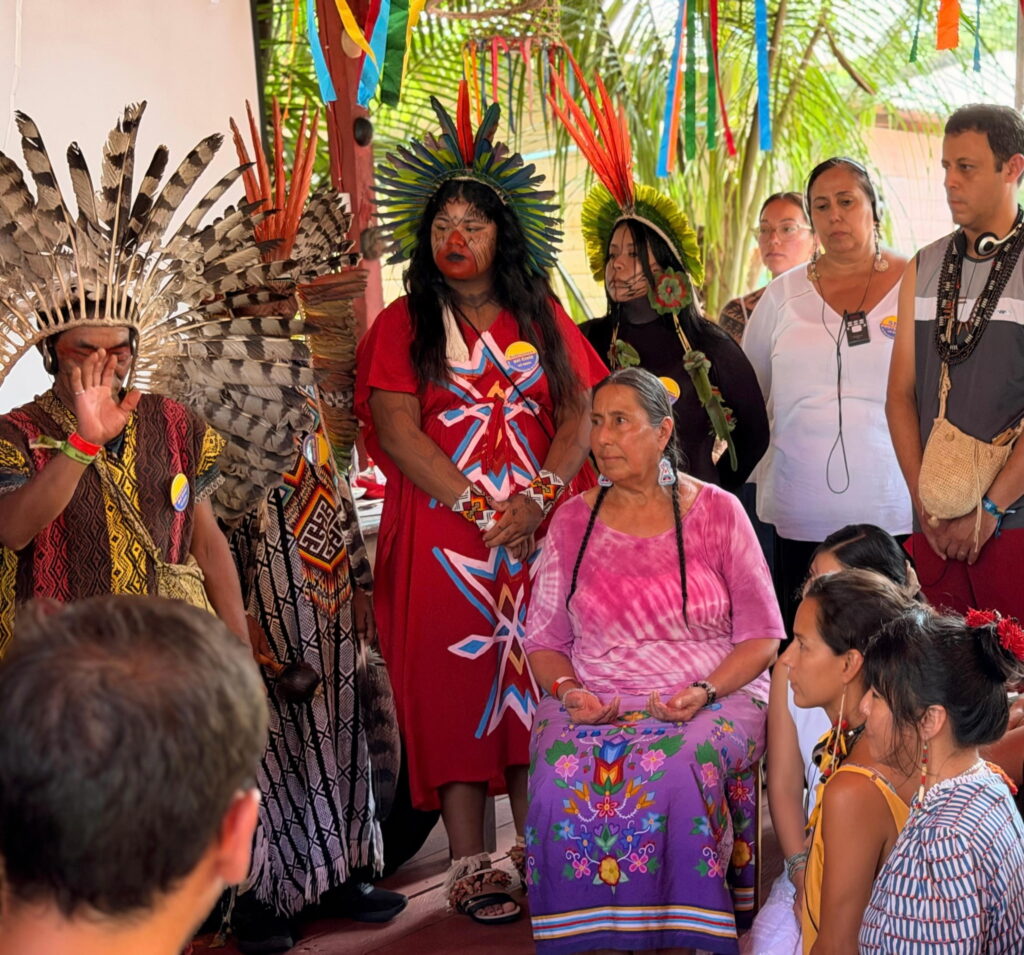
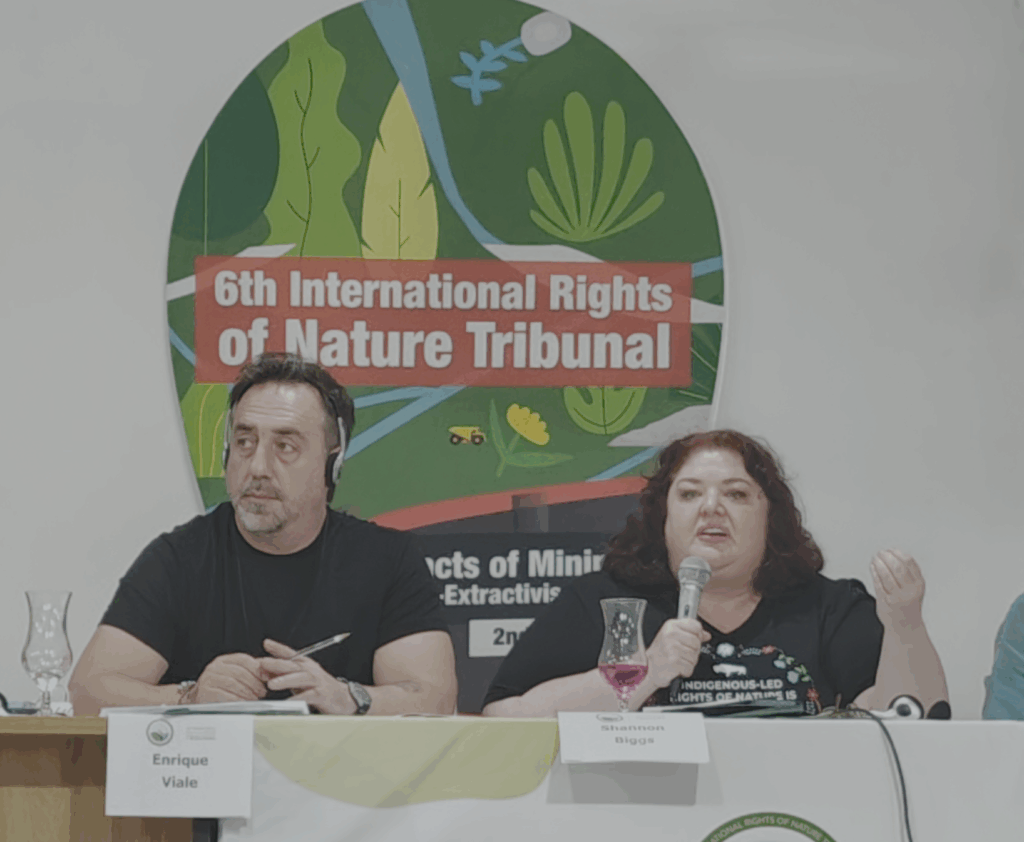
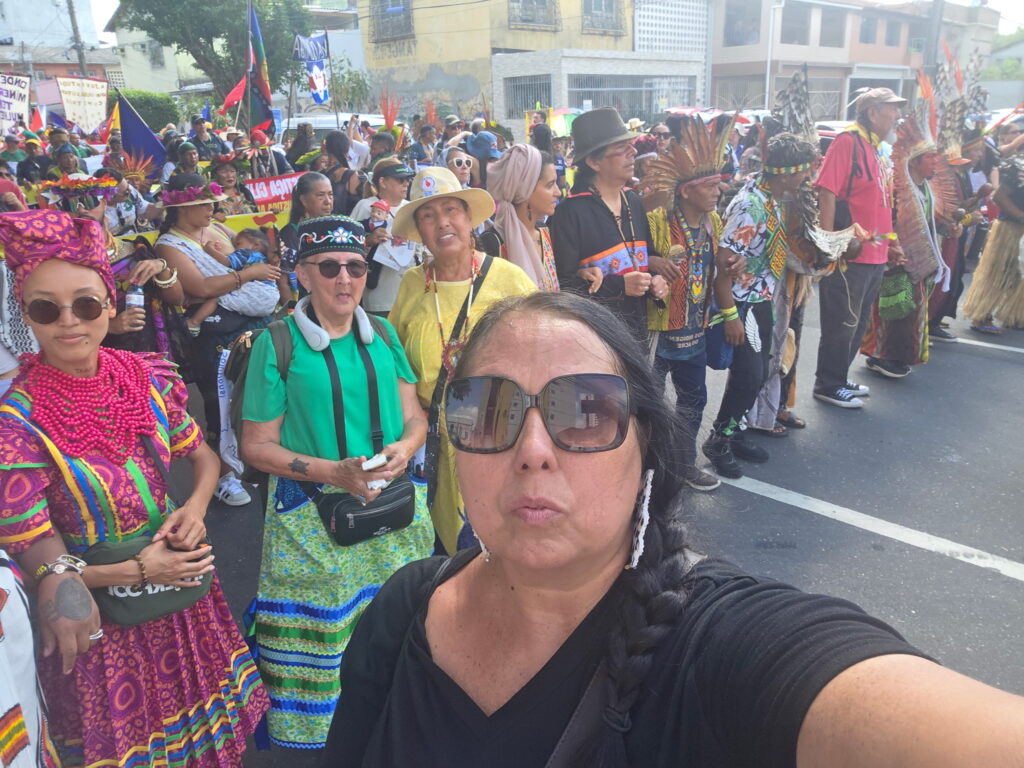
There were high points as well. Our Movement Rights report was launched and received very positive feedback. The Global Alliance for the Rights of Nature Pre-COP summit was phenomenal. The People’s March was over 50,000 strong, and we were so proud to be a part of it! Indigenous-led Rights of Nature had a strong presence in the Blue Zone and in other spaces throughout Belem. Indigenous Peoples showed up and showed out! The newsworthy Indigenous demonstration in particular made an impact. COP30 Executive Director Ana Toni described the demonstrations as “legitimate” and confirmed that the government was listening. In a clear victory for the Indigenous demonstrators, the Brazilian government recognized 10 new Indigenous territories before COP 30 was over. Colombia and the Netherlands announced the first International Conference on the Just Transition Away from Fossil Fuels (April 2026). The strength and determination of women and Indigenous women, were on full display. Civil Society made noise, showed up in caravans and flotillas, and demanded justice and inclusion. And the youth were something to see in action. I am so proud to stand witness to the next generation of Pro-Activits and their articulate and inspired work.
So we come away with a feeling of duality—one of inspiration, and one of frustration. But we will continue to show up. We will continue to be seen and heard, and we will continue to advance and fight for the Rights of Mother Earth. Indigenous-led Rights of Nature is a climate solution—I’m ready for an Action!
About the Author
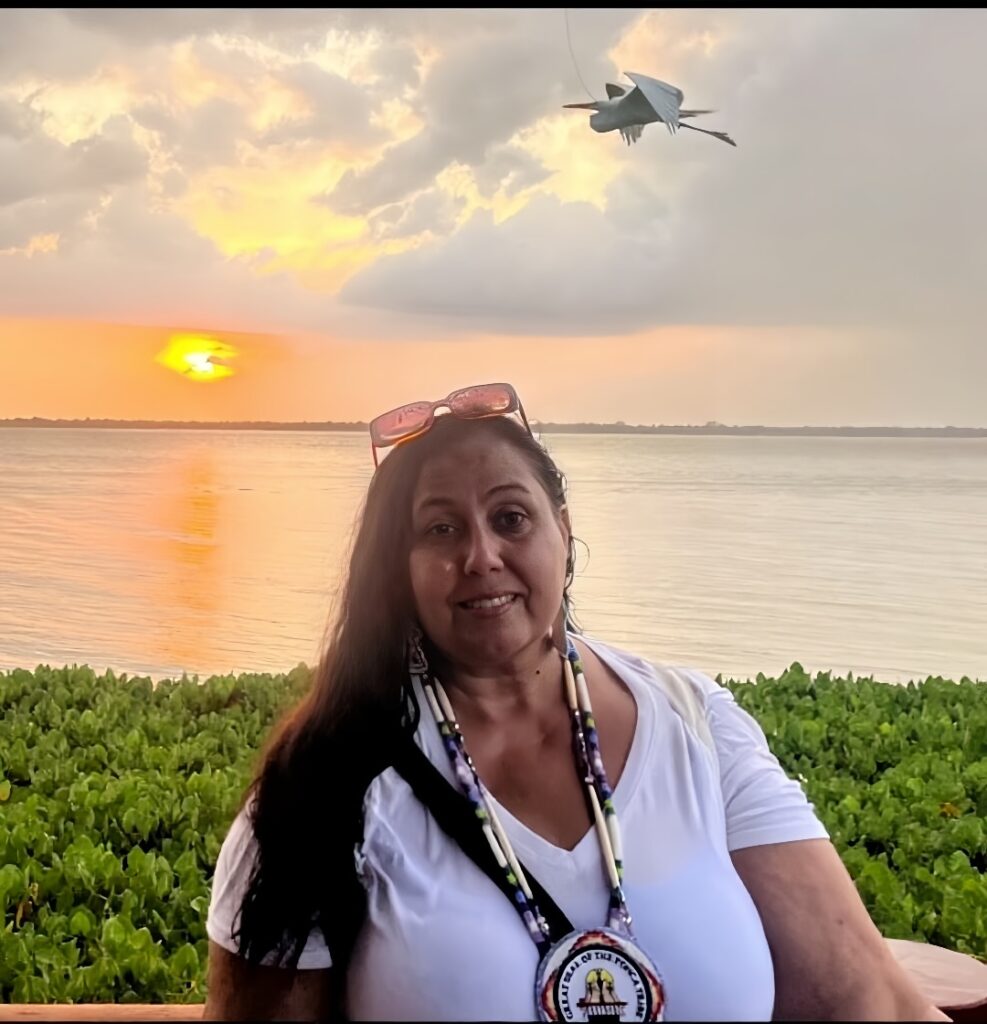
Julia Horinek, a member of the Ponca Nation of Oklahoma is Movement Rights’ Plains Coordinator. In addition to her work for Rights of Nature in the Plains and across Turtle Island, she is also a leader in the Global Alliance for the Rights of Nature’s Indigenous Council, participating in many UN processes, though this was her first COP. To read more about Julia visit her bio.
Working with Tribes and Communities to Align Human Laws with Natural Laws and advance climate justice.We are in the streets, in the news and in the courts, providing research and reports, convening strategic gatherings, speaking at the UN, community meetings, regulatory hearings, and more. We work with national and global climate allies, sovereign Indigenous Nations and communities. We have helped thousands of people connect the dots between the critical time we find ourselves in and the solutions that Indigenous people have always known: human activity must take place within the natural system of laws that govern life on Earth. We sit on the steering committee for People Vs Fossil Fuels coalition, and are a co-founder and Executive Committee member of the Global Alliance for the Rights of Nature. Movement Rights works for climate justice, the rights of Indigenous peoples and the Rights of Nature. Consider making a donation today to support our work.